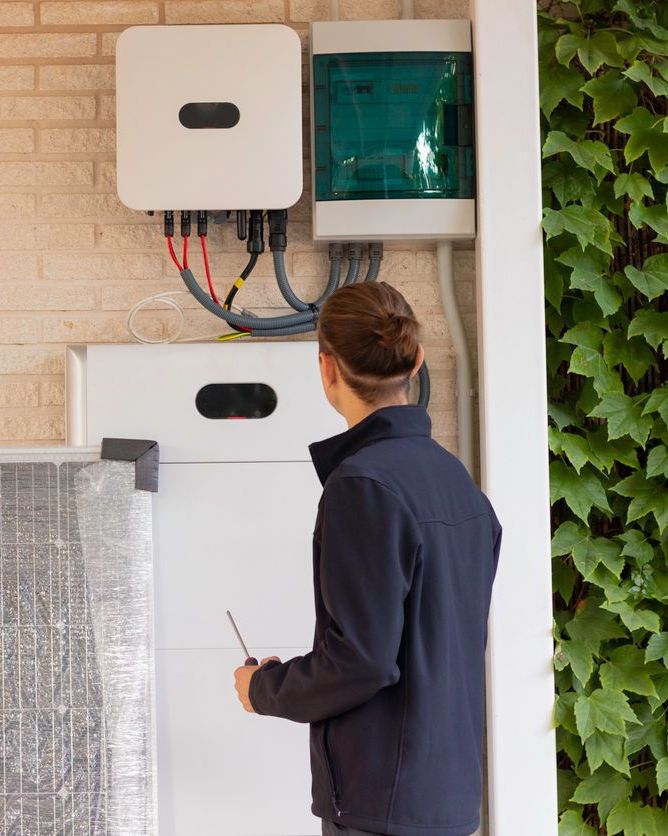

This guide is designed to make that market easier to read. It looks at the major battery brands in Australia, the product lines they sell into the residential market, and the role each brand tends to play.
To make that easier, we will occasionally borrow comparisons from the car world. Most people already have a feel for the difference between a mainstream brand, a premium brand, a newer challenger and a rugged workhorse. Batteries are obviously not cars, but the analogy is a useful shortcut when you are still learning the market.
The point is not to tell you which battery is “best”. It is to help you understand what kind of brand you are looking at, what sort of buyer it suits, and which names are worth shortlisting before you even begin comparing quotes.
Whether you are a homeowner researching your first battery or a small business trying to make sense of the main players, this is the easier way to understand the Australian battery market.
Battery Brand Explorer
Use this section as the practical part of the page. Readers should be able to browse all major battery brands at a glance, then switch into a compare mode to line up two or three brands side by side.
[PLACEHOLDER — sortable brand table + compare mode]
Why battery brands are confusing
Most people do not enter the battery market with a mental shortlist. They might know Tesla. They might have heard of Sungrow or BYD. But very few homeowners know which brands are trusted mainstream names, which brands are newer challengers, which brands are premium system plays, and which brands matter most for off-grid or rural applications. That confusion is normal. In Australia, the battery market now includes a long list of brands with very different levels of maturity, support, integration and installer familiarity.
The other reason battery buying feels confusing is that most products now look broadly similar from a distance. They are usually modular. They are usually lithium iron phosphate. They usually promise backup, app monitoring and solar self-consumption. But those similarities can hide big differences in how polished the system feels, how easy it is to expand, how well it handles backup, how locked-in it is to one ecosystem, and how comfortable installers are recommending it.
That is why brand position matters. People are not just buying a battery box. They are buying trust, service, software, support and a certain type of ownership experience.
How the car analogy works
The car analogy is not literal. A battery brand is not actually a Toyota or a BMW. The point is to give beginners a shortcut. Most people already understand how car brands sit in the market: some are dependable mainstream choices, some are flashy premium names, some are ambitious newcomers trying to win attention fast, and some are built for tougher jobs rather than polish.
That is how to use the analogy here. Think of it as a way to understand brand position, trust, maturity, feature depth, likely buyer fit and overall ownership feel. A battery can feel like a Toyota because it is a safe shortlist choice. It can feel like a BMW because the software, integration and presentation are stronger. Or it can feel like a LandCruiser because it matters most when the job gets harder. That is more useful for a beginner than jumping straight into voltages, power ratings and chemistry charts.
The 4 battery brand categories
Toyota / Mazda
Reliable, value-packed mainstream brands
This is the safest part of the market for most homeowners. These are the brands that feel like the sensible shortlist. They are not necessarily the cheapest, and they are not always the flashiest, but they are familiar to installers, widely deployed, and easy to recommend without feeling reckless.
- Sungrow
- BYD
- GoodWe
- Growatt
- Pylontech
- Huawei
- SolaX
These brands tend to offer modular lithium iron phosphate systems, broad residential coverage, and a strong sense that the products are built for normal households rather than for enthusiasts chasing the newest feature set.
Within this group, you can still see little “Corolla to Kluger” ladders. Sungrow starts with SBR as the straightforward home line and steps up to SBH for bigger homes or bigger ambitions. BYD starts with HVS as the cleaner home entry point and moves up into HVM and LVL when more scale or flexibility matters. GoodWe goes from Lynx U to Lynx F/D, then into ESA if you want a more integrated step-up. Growatt has a similar story, with ARK as the more everyday option and APX as the more advanced trim.
For most suburban buyers, this is the category where the shortlist usually begins.
Geely / Jaecoo
Newer, less-proven brands in the value end of the market
If you haven’t heard of Geely or Jaecoo, you’re not alone. Admittedly, I had to research them when writing this article. They are newer car brands which look promising, but are untested. There are similar brands in the battery market, that often look very appealing on paper. These brands can offer strong feature sets, good modularity, sharp specifications and attractive value. The trade-off is that they generally do not yet carry the same long-running trust or installer comfort level as the safest mainstream names.
- AlphaESS
- Fox ESS
- Dyness
- Deye
- iStore
These are not “bad brands.” In many cases they are quite the opposite: ambitious, feature-rich and clearly trying to win market share quickly. But they feel more like newer challengers than old-reliable incumbents.
Within-brand ladders matter here too. Fox ESS starts with EQ / EP as the more everyday value options, then steps up to CQ6 for denser, bigger stacks. Dyness starts with PowerBox and PowerBrick, then moves up into Tower and beyond that into commercial families. AlphaESS keeps it simple for beginners by splitting the range mostly into single-phase and three-phase families, so the basic decision is not “Which weird code do I want?” but “What sort of home and system am I building around?”
This category suits buyers who are comfortable with newer challengers, like value, and are not relying purely on brand familiarity to feel confident.
BMW / Mercedes
Premium brands
This is the premium end of the market. Premium does not automatically mean “best.” It means the product tends to feel more polished, more integrated, more software-led, more design-conscious, or more complete as an ownership experience.
- Tesla
- Sigenergy
- FranklinWH
- Anker SOLIX
- sonnen
- Enphase
- SolarEdge
- EcoFlow
- FIMER
Some lean hardest into whole-home orchestration. Some lean into warranty, software and backup behaviour. Some are premium because they feel tightly integrated rather than modular in a workmanlike way. But overall, this is the category for buyers who want the system to feel refined, not just functional.
Here the brand ladders are often less about many product names and more about how far into the ecosystem you go. Tesla is the cleanest example: Powerwall is the brand, and the step-up is simply adding more capability around it. Sigenergy uses SigenStor as the main home line, but the experience changes a lot depending on whether you are looking at a smaller stack or a more loaded version with EV charging integration. sonnen separates its offer more clearly, with sonnenBatterie hybrid as the premium everyday line and sonnenBatterie Evo as the more outdoor-ready step-up. FranklinWH is less about many named families and more about using extra aPower units to build a larger premium system.
If you are the kind of buyer who cares about confidence, design, backup behaviour, app quality and overall ownership feel, this is probably where you will spend most of your time.
LandCruiser / Isuzu
Rugged and off-grid specialists
Some battery brands matter most when the site is harder, the conditions are harsher, or the system is expected to work much harder than a normal suburban setup. This is the workhorse category. It is less about showroom polish and more about durability, flexibility and suitability for rural, remote or demanding applications.
- RedEarth
- PowerPlus Energy
- Zenaji
They are especially relevant for farms, off-grid homes, remote properties, generator-assisted systems and buyers who care more about toughness and longevity than the slickest app experience. RedEarth and PowerPlus also carry extra weight because they are strongly Australian-made or Australian-focused plays in a category where that matters to many buyers. Zenaji stands apart again because it uses LTO chemistry rather than the LFP chemistry that dominates most of the mainstream market.
Within this group, the line-up ladders are easier to picture in vehicle terms. PowerPlus Eco is like the simpler work ute, while LiFe Premium and Escape are the more serious step-ups. RedEarth Troppo Ultra is the core battery building block, while DropBear and Gecko feel more like complete workhorse systems. Zenaji Aeon is the home-oriented entry to the brand, while Endless and Eternity are the heavier-duty versions for sites where long life and high cycling matter most.
For a typical metro buyer, this category may be less relevant. For the right property, it can be the most important category on the page.
Beginner buying advice
The goal of this guide is not to make you pick an exact battery today. The goal is to help you narrow the field to the right type of brand.
If you want the safest, easiest shortlist, start in the Toyota / Mazda lane If you like value and you are comfortable with newer challengers, spend time in the Geely / Jaecoo lane. If you care most about polish, premium feel and a more integrated ownership experience, start with the BMW / Audi / Mercedes end of the market. And if your property or use case is harder than average, do not treat the LandCruiser / Isuzu lane as niche.
Most buyers do not need to decide between individual battery models on day one. They need to decide which lane feels right. Do you want mainstream trust, newer-brand value, premium polish, or rugged off-grid strength? Once you know that, quotes start making a lot more sense.
Quick-scan table
| Brand | Car analogy | Market position | Main series / product lines | How the line-up steps up | Best fit |
|---|---|---|---|---|---|
| Tesla | BMW / Audi | Premium | Powerwall | Powerwall is essentially the hero line; scale comes from adding units rather than choosing a long ladder of families | Homeowners who want a polished, recognisable, premium whole-home battery |
| Sungrow | Toyota | Mainstream trusted | SBR, SBH, PowerStack, PowerTitan | SBR is the everyday home line, SBH is the step-up for larger homes, then PowerStack and PowerTitan move into business and utility scale | Mainstream households, bigger homes, business crossover |
| BYD | Toyota / Mazda | Mainstream trusted | Battery-Box Premium HVS, HVM, LVS, LVL, Commercial | HVS is the simpler home line, HVM and LVL step up for more scale and flexibility, Commercial goes further again | Buyers who want a proven modular battery family with lots of installer familiarity |
| GoodWe | Toyota / Mazda | Mainstream to value | Lynx U, Lynx F/F G2/D, ESA Home, ESA C&I | Lynx U is the easier entry point, Lynx F/D moves up into higher-voltage towers, ESA is the more integrated step-up | Value-conscious mainstream buyers, larger homes, small business |
| Growatt | Mazda / Kia | Value mainstream | ARK, APX, AXE, Commercial ESS | ARK feels like the simpler mainstream line, APX is the more advanced step-up, AXE and commercial products push into off-grid and business | Budget-aware buyers who still want a well-known name |
| Pylontech | Toyota HiAce / workhorse Toyota | Mainstream modular | US / UP / UF, Force H, Pelio, Fidus | US-style rack units are the classic workhorse option, Force H is the higher-voltage tower step-up, Pelio and Fidus feel more integrated | Retrofit-heavy jobs, modular systems, off-grid crossover |
| Huawei | Mazda | Mainstream smart | LUNA2000 S0, LUNA2000 S1 | S0 is the earlier home family, S1 is the newer step-up with larger scaling | Buyers already looking at Huawei-style hybrid ecosystems |
| SolaX | Mazda / Skoda | Mainstream to upper-mainstream | Triple Power / T-BAT, HS51, AELIO | Triple Power is the everyday home line, HS51 is the more whole-home step-up, AELIO moves into commercial | Buyers who want a flexible modular brand with home and business crossover |
| AlphaESS | Kia / Skoda | Value-packed mainstream | SMILE single-phase family, SMILE three-phase family | Single-phase lines are the easier entry point, three-phase families are the bigger-house step-up | Buyers who want value, familiarity and lots of residential packaging options |
| Fox ESS | Geely / Jaecoo | Newer value challenger | EQ / EP, CQ6 | EQ and EP are the everyday value lines, CQ6 is the more serious step-up for larger stacks | Early adopters who want strong features and sharp value |
| Dyness | Geely / Jaecoo | Newer value challenger | PowerBox, PowerBrick, Tower, Cygni / STACK100 / DH | PowerBox and PowerBrick are the entry lines, Tower steps up, then the commercial family goes much further | Buyers chasing value and modular flexibility |
| Deye | Geely / Jaecoo | Budget to value | AI-W all-in-one, 10.2 kWh LV, SE-G, BOS-G | AI-W is the simpler all-in-one entry, then separate LV and HV paths step up from there | Budget-led buyers and off-grid-leaning projects |
| iStore | Kia with an Australian badge | Value to mid-market | Smart Battery / IS-BATT-5000 family | The family scales in 5 kWh-style steps rather than many named premium sub-lines | Buyers who like a local-facing brand and straightforward modular expansion |
| Sigenergy | BMW / Audi | Premium tech | SigenStor, SigenStack | SigenStor is the hero home line; larger stacks and EV charging integration are the more loaded trims; SigenStack is the business step-up | Buyers who want premium hardware, strong software and future-facing features |
| FranklinWH | Mercedes E-Class | Premium retrofit-friendly | aPower family | aPower is the core line; scale comes from adding more batteries behind the system | Homeowners who want premium whole-home backup, especially on existing solar |
| Anker SOLIX | Audi newcomer | Premium newcomer | X1 | X1 covers multiple sizes and configurations, with scale achieved by adding modules and system components | Design-conscious buyers wanting a modern premium platform |
| Enphase | Volvo / Mercedes | Premium ecosystem | IQ Battery | The IQ line is less about many named families and more about stacking within the Enphase ecosystem | Buyers who care about software, warranty, backup behaviour and microinverter integration |
| sonnen | Mercedes / Volvo | Premium mature | sonnenBatterie hybrid, sonnenBatterie Evo | Hybrid is the premium everyday line, Evo is the more outdoor-ready, backup-focused step-up | Buyers who want premium feel, reputation and a mature ownership experience |
| SolarEdge | Mercedes locked into one ecosystem | Premium ecosystem | Home Battery 400V / 48V | The line-up is narrower; the real “trim choice” is how far you go into the SolarEdge home ecosystem | Buyers already committed to SolarEdge-style home energy architecture |
| EcoFlow | Audi / Volvo newcomer | Premium newcomer | PowerOcean Single-Phase, PowerOcean, PowerOcean Plus | Single-Phase is the simpler entry, three-phase and Plus versions step up | Buyers who like sleek newer premium brands and app-led experiences |
| FIMER | Niche European premium | Niche premium | REACT 2 | REACT 2 is the core name rather than a broad family ladder | Buyers who want a less common European-style ecosystem |
| RedEarth | LandCruiser | Rugged / Australian-made | Troppo Ultra, DropBear, Gecko | Troppo Ultra is the core battery building block, DropBear and Gecko are more complete workhorse systems | Rural, backup-heavy and off-grid-leaning Australian jobs |
| PowerPlus Energy | Isuzu D-Max | Rugged / Australian-made | Eco Series, LiFe Premium / N70, Whispr-7, Escape | Eco is the simpler value workhorse, LiFe Premium is the more serious bank, Whispr and Escape are more integrated step-ups | Rural, bespoke, off-grid and harder-working systems |
| Zenaji | Expedition truck / extreme LandCruiser | Rugged specialist | Aeon, Endless, Eternity | Aeon is the home entry point, Endless and Eternity step up into heavier-duty and higher-cycle jobs | Buyers prioritising extreme longevity, harsh conditions or heavy cycling |
| Redback | Known local name, but hard to place cleanly today | Legacy / limited public visibility | Public 2026 line-up less clearly catalogued | Brand presence is visible, but the current public product ladder is harder to verify cleanly | A name worth recognising, but one to treat carefully until product clarity improves |