
Who is Tesla in home batteries?
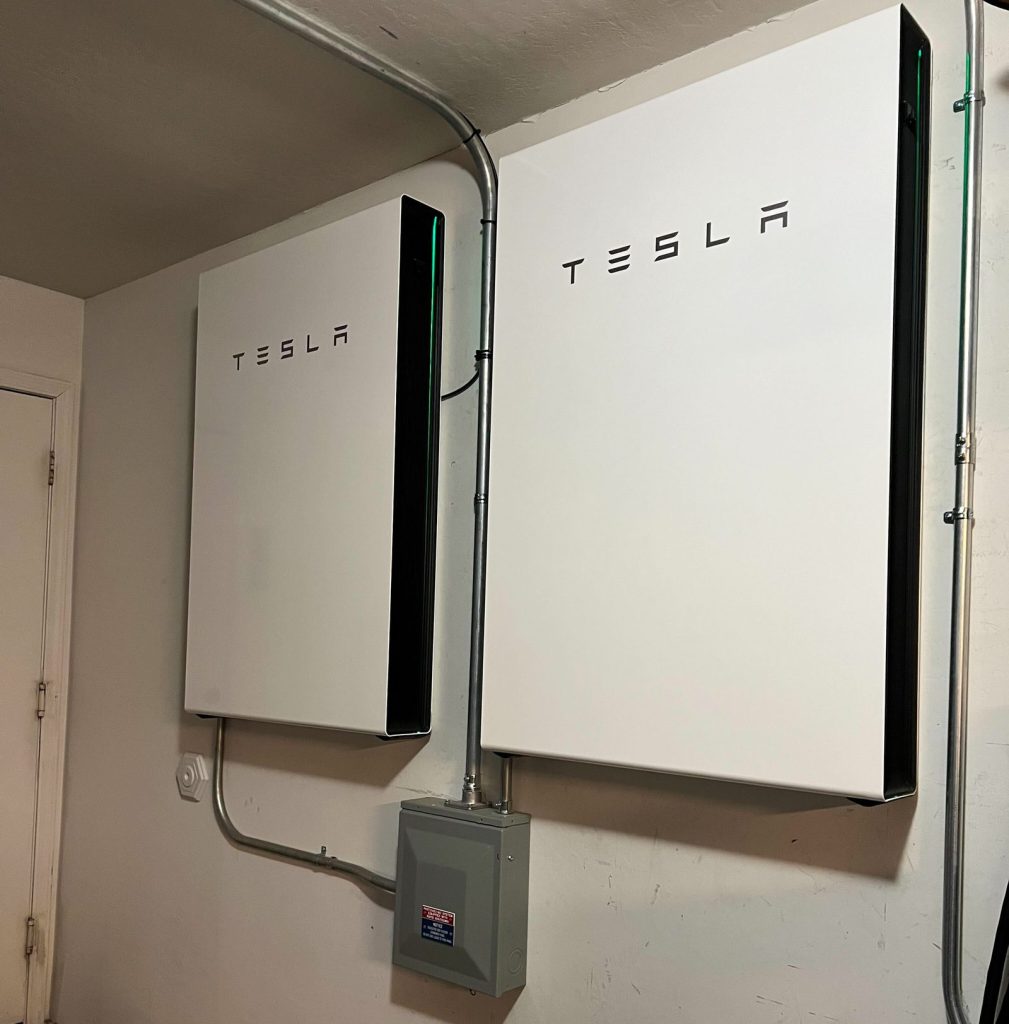
Tesla makes the Powerwall alongside its cars. Powerwall 3 launched in Australia and New Zealand in August 2024. Its local company is Tesla Motors Australia Pty Ltd, and the Powerwall warranty lists an Australian support line and address.
Tesla is still treated as a benchmark: our own roundup of battery brands pitches the Powerwall at homeowners who want a polished, recognisable, premium battery. It is no longer the only serious option, though. Tesla was the most popular battery in the previous year’s Solar Nerds installer survey, but in the Solar Nerds 2025 Solar Industry Survey it didn’t make the top five, and newer brands such as Sigenergy, Sungrow and Alpha ESS now compete hard for the same homes. In plain English: Tesla is still a premium, respected choice, just not the default it once was.
Solaris Finance’s own data shows how far that has gone. Tesla was the battery on about 1 in 5 of the battery systems we financed from 2023 to mid-2025, and on about 1 in 50 in the first half of 2026. It is still priced as a premium product: on systems financed since the federal battery rebate began, a Powerwall cost about 9% more than an average battery of the same size (Solaris Finance data, systems financed from December 2022 to August 2026. These are only the systems financed through Solaris, not the whole market.) I think it’s mostly the market changing around Tesla:
How you buy one is specific to Tesla. You go through a Tesla Certified Installer, an installer Tesla has approved to sell, fit and support its energy products, or through Tesla itself. That matters for the warranty. It cuts both ways: more consistency, less choice of installer.
What does Tesla make for homes?
A quick bit of jargon first. kWh (kilowatt-hours) is how much energy a battery holds: think of it as the size of the bucket. kW (kilowatts) is how fast it can pour that energy out: roughly, how many appliances it can run at once.
Powerwall 3
The current model. It holds 13.5 kWh and has a solar inverter built in (the box that turns DC power from panels and batteries into the AC power your house runs on). According to Tesla’s Australian datasheet, it takes up to 20 kW of solar panels across three separate inputs, and it is set up to deliver 5 kW, 10 kW or 11.04 kW of continuous power. Which one you get depends on your site and your network’s rules, so ask which figure your quote is for.
Powerwall 3 Expansion
A storage-only add-on: a Powerwall 3 without the inverter. Each one adds 13.5 kWh, and a single Powerwall 3 takes up to three, for 54 kWh from one inverter. It works with Powerwall 3, and Tesla’s 2026 datasheet for the newer Powerwall 3AC lists one to three Expansions for that model too. One catch in the fine print: the datasheet says that with Expansions fitted, charging is limited to 5 kW until a future firmware version raises it.
Powerwall 3AC
A newer, AC-only version with an Australian datasheet: 13.5 kWh, 5 kW and no solar inputs, for homes that already have solar. Tesla says that without a solar inverter it’s classed as an energy storage system, which can give more room under network limits on inverter capacity. Ask your installer whether it’s offered in your area.
Powerwall 2
The previous generation: just a battery, 13.5 kWh and 5 kW, beside a separate solar inverter. You’ll still see it on existing homes.
Backup Gateway 2
The control box that sits with the Powerwall. It detects a blackout, disconnects you from the grid and switches your home to battery power. It is not a battery itself.
| Model | Usable storage | Continuous output | Solar inverter built in? | Where it fits |
|---|---|---|---|---|
| Powerwall 3 | 13.5 kWh | 5, 10 or 11.04 kW (as configured) | Yes, up to 20 kW of panels | New solar-and-battery systems, or added to existing solar |
| Powerwall 3 Expansion | 13.5 kWh | None of its own | No | Extra storage for a Powerwall 3, up to three per unit |
| Powerwall 3AC | 13.5 kWh | 5 kW | No | Homes with existing solar, or battery-only setups |
| Powerwall 2 | 13.5 kWh | 5 kW | No | Existing installs only |
How is Powerwall 3 different from Powerwall 2?
The big leap is that Powerwall 3 moved the solar inverter inside the battery, so one unit is two products in one box. The practical difference comes down to AC vs DC coupling, explained in our guide to AC-coupled vs DC-coupled batteries.
- On a brand-new solar-and-battery system, your panels feed DC straight into the Powerwall 3’s built-in inverter. This is DC coupling, and it means fewer boxes on the wall.
- On a home that already has solar, Tesla says Powerwall 3 can also be AC coupled: it sits beside your existing inverter and connects on the AC side, and its own solar inverter goes largely unused unless you redo the solar. That’s the gap the Powerwall 3AC is meant to fill.
Mixing the generations used to be a flat no. In September 2026 Tesla confirmed a software update that lets a Powerwall 3 work with an existing Powerwall 2 in Australia: up to four Powerwall 2s, one Powerwall 3 and up to three Expansions, with the Powerwall 2s keeping their original warranty. It’s new, so get the exact configuration promised in writing for your site.
Can a Powerwall back up a three-phase home?
Most Australian homes have a single-phase supply: one “lane” of power coming in. Bigger or newer homes often have three-phase: three lanes. (More in our guide to single-phase vs three-phase inverters.)
Tesla’s Australian datasheet lists Powerwall 3 as a single-phase unit. Day to day, with the grid up, a Powerwall on a three-phase home still stores and uses your solar. The catch is backup. As SolarQuotes explains, in a blackout a Powerwall 3 on a three-phase home backs up only the phase it’s connected to. You can put a Powerwall on each phase, but they don’t sync up to run true three-phase appliances during an outage.
If whole-home backup on three phases is the goal, a battery built for three phases may suit better.
What makes Tesla different?
It’s one integrated system. On a new install, Powerwall 3 is the battery, the solar inverter and (with the Gateway) the backup switch from one maker, managed in one app.
Backup is designed in. When the grid goes down, the Gateway detects it and switches your home to the battery. It can be set up for whole-home backup or partial-home backup, where your installer picks the circuits that stay on. What you can really back up depends on your loads, switchboard and phases; see our guide to batteries with blackout backup.
You run it from the Tesla app. Tesla’s setup guide lists the settings: a Backup Reserve (the share of the battery kept aside for blackouts, 20% by default), Self-Powered mode (stores daytime solar and runs the house on it after dark, the default), and Time-Based Control (charges and discharges around your tariff). A Powerwall can also join a virtual power plant, where a retailer draws on some of your stored energy to support the grid and pays you for it. Note that Tesla’s own VPP, the Tesla Energy Plan, closed to new customers and ended on 30 September 2025, as SolarQuotes reported, so ask which VPPs currently accept a Powerwall.
The honest trade-off is the size of the steps. A Powerwall comes in 13.5 kWh chunks, so if you want to start small and grow in finer increments, a modular battery may fit better.
Does a Powerwall qualify for the battery rebate?
To get the federal Cheaper Home Batteries discount, under the Clean Energy Regulator’s rules, the battery has to be new, on the Clean Energy Council’s approved list, installed with solar, connected to an inverter that can take part in a VPP, and fitted by an accredited installer with a battery endorsement. The Regulator has said Powerwall 2 is not eligible. For a Powerwall 3, ask your installer to confirm its current listing and that your setup meets the rules on your installation date, because they change. Our guide explains how the battery rebate works.
This page leaves prices out because they move too often. See what a battery costs in Australia and what puts a battery in the premium price tier.
What warranty does Tesla give in Australia, and who honours it?
Tesla’s Australia and New Zealand Powerwall warranty (revision 1.16, effective 6 May 2026) covers Powerwall 2, Powerwall 3 and the Expansion. It runs 10 years against defects, and guarantees the battery will still hold at least 70% of its 13.5 kWh at the end of that decade. For normal home use (storing your solar, time-shifting to your tariff and backup) there’s no cycle limit. Other uses are capped at 37.8 MWh of energy through the battery.
Conditions worth flagging:
- It must have been bought from Tesla or a Tesla Certified Installer in Australia or New Zealand, and installed here.
- Installation, repair or opening the casing by anyone other than Tesla or a certified installer can void it.
- You need to keep it connected to the internet and registered with Tesla. If not, Tesla says it may not honour the full 10 years, but will always honour at least four years from installation.
- A later owner can claim with proof of ownership, which matters if you’re buying a house with a Powerwall.
If something goes wrong, the warranty says to contact the certified installer who sold it to you first, and Tesla (Australian support line, office in Alexandria, NSW) if you can’t reach them or bought direct. This sits on top of your rights under the Australian Consumer Law, which the warranty says it doesn’t limit. More in our guide to solar warranties.
It’s also fair to mention the Powerwall 2 recall. In September 2025 Tesla issued a voluntary recall of some Powerwall 2 units whose third-party battery cells could overheat, after a few cases of smoke or flames and minor property damage (no injuries reported). Affected units are discharged remotely and replaced at no cost, and Tesla said Powerwall 3 is not affected. It’s a fair data point when you’re weighing up the brand.
Who is a Tesla Powerwall a good fit for?
A Powerwall 3 is a strong fit if you’re on a single-phase home, you want backup designed in, you like one maker and one app for battery, inverter and backup, and you’re either putting in new solar (where the built-in inverter earns its keep) or adding storage to solid existing solar.
Think harder if you’re on a three-phase home and true three-phase backup is the goal; if price per kWh matters most to you (our roundups place Tesla in the premium bracket); if you want the widest choice of installers; or if you want to grow your storage in steps smaller than 13.5 kWh. Our roundup of inverter brands covers the alternatives.
If you take one line away: the Powerwall isn’t the only obvious choice any more, but it’s still one of the names many people start with. Whichever way you lean, get the phase, the configured output, the rebate eligibility and the warranty conditions in writing before you sign. Our guide to choosing the right solar installer helps when you compare quotes.
Frequently Asked Questions
Is the Powerwall 3 a battery and an inverter in one?
Yes. Powerwall 3 has a solar inverter built in, so on a new install your panels can connect straight to it. Powerwall 2 and the Powerwall 3AC don't have one.
Can I add a Powerwall 3 to my existing Powerwall 2?
Since a software update confirmed in September 2026, yes, in Australia. Tesla's supported mix is up to four Powerwall 2s, one Powerwall 3 and up to three Expansions. Get the exact setup confirmed in writing for your site.
Does a Powerwall 3 back up all three phases in a blackout?
No. It's a single-phase unit, so on a three-phase home it backs up only the phase it's connected to. With the grid up, it still stores and uses your solar.
How long is the Tesla Powerwall warranty in Australia?
Ten years against defects, with at least 70% of 13.5 kWh left at ten years. It depends on conditions, including buying from a Tesla Certified Installer and keeping the Powerwall online and registered.
Who do I contact if my Powerwall has a problem?
Start with the Tesla Certified Installer who sold it to you. If you can't reach them, or you bought directly from Tesla, contact Tesla's Australian support.