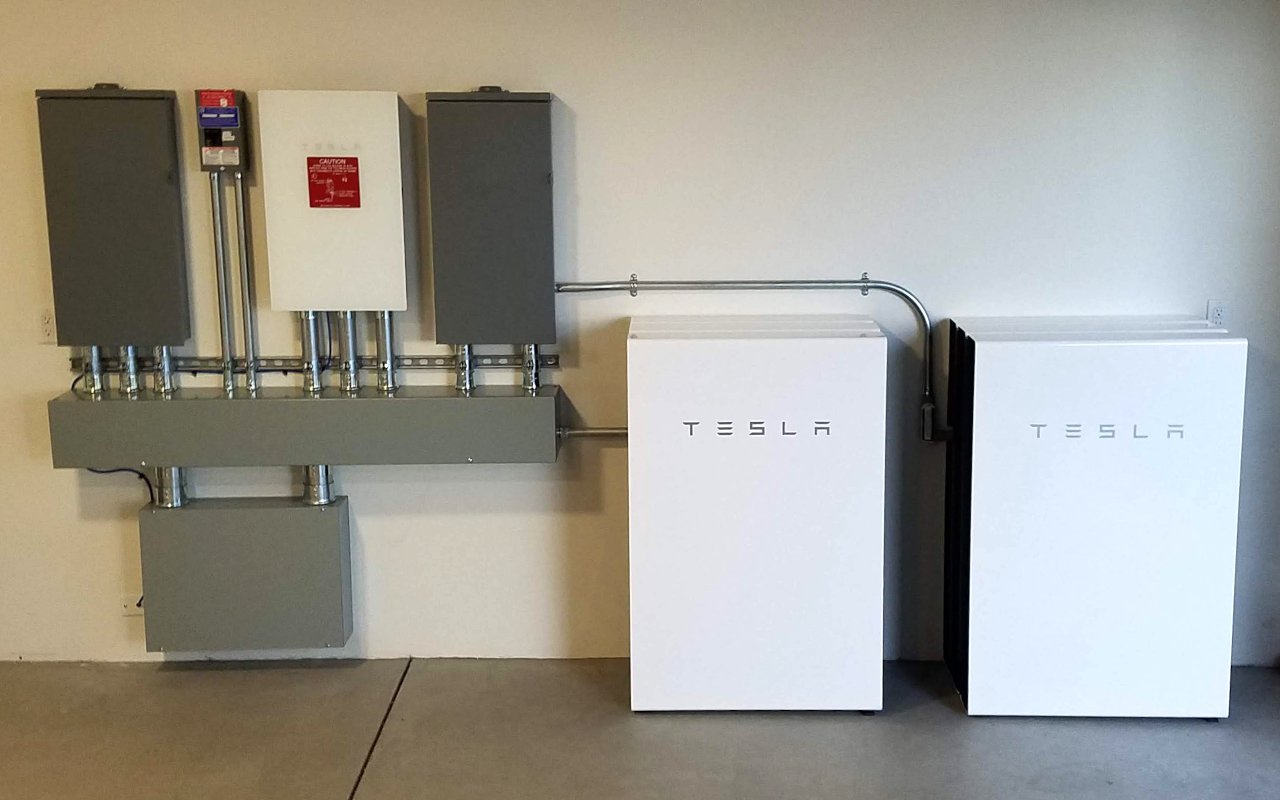

What “premium” means in a battery
A premium battery isn’t a mid-tier one with a bigger sticker. It’s usually a different choice at every layer: a longer warranty, higher round-trip efficiency, stronger continuous power output for backup, and — crucially — a brand with the financial backing and local support to still be standing when you make a claim in year 12.
In the Australian market, premium battery-only usually means one of three names:
- Tesla Powerwall 3 — 13.5 kWh, an integrated inverter, and 11.5 kW of continuous output, the highest single-unit backup power on the market. The best app experience and genuine whole-home blackout capability.
- Enphase IQ Battery 5P — modular 5 kWh blocks with microinverters built in, a 15-year warranty (the longest available), and 96% round-trip efficiency, the highest of any mainstream battery. The natural choice if you’re already on Enphase microinverters.
- sonnen — German-built, a 15-year warranty, and a reputation for longevity that sits at the top of the market.
What a premium battery costs
These are battery-only retrofit prices for a major city in mid-2026, after the federal Cheaper Home Batteries rebate.
| Premium battery | Usable capacity | Installed (after rebate) | Notes |
|---|---|---|---|
| Tesla Powerwall 3 | 13.5 kWh | $12,000 – $14,500 | integrated inverter; 11.5 kW backup |
| Enphase IQ Battery 5P (×2) | ~10 kWh | $14,500 – $17,000 | 15-yr warranty; needs IQ controller |
| sonnen | ~10 kWh | $13,000 – $16,500 | German-built; 15-yr warranty |
One quirk worth knowing: the Powerwall 3 is premium on brand, power and backup, but its integrated inverter keeps its per-kWh cost closer to $900–$1,075 — nearer mid-tier than you’d expect. Enphase sits at the other end, around $1,450–$1,650 per kWh, the most expensive storage per kilowatt-hour in Australia. That spread is why “premium” is a range, not a single number.
What the extra money buys
Three things, mostly.
Longer, more bankable warranties. Enphase and sonnen back their batteries for 15 years rather than the standard 10. A warranty is only ever worth as much as the company behind it, and premium brands are the ones most likely to honour a claim well into the next decade.
Better real-world performance. Higher round-trip efficiency means more of every stored kilowatt-hour actually reaches your appliances — Enphase’s 96% versus a typical 89–90% adds up to hundreds of kWh a year for a household that cycles daily. Premium batteries also tend to hold up better in heat, which matters in an Australian summer.
Stronger backup. If keeping the whole house running through a blackout matters to you, the Powerwall 3’s 11.5 kW output can carry air-conditioning and heavy loads that a smaller battery would throttle.
What pushes a premium quote even higher
Even within the premium tier, some things add cost: three-phase power, a switchboard upgrade, long cable runs from the board to the battery, multi-storey access, and full whole-home backup wiring rather than a few essential circuits. None are premium-specific, but premium buyers ask for them more often.
Who a premium battery suits — and who it doesn’t
Premium makes sense if you’re staying in the home long-term, you want genuine whole-home blackout backup, you’re already in the Enphase ecosystem, or you simply value the longer warranty and lower-stress ownership and can fund it. The efficiency and warranty edge compounds over 20 years.
It’s harder to justify if your budget is tight or payback is your deciding number — a mid-tier battery will save you almost exactly the same on your power bill for thousands less upfront. Premium rarely wins a pure dollars-and-cents race; it wins on longevity, resilience and peace of mind.
A useful gut check: if a premium quote is more than about 60% above the mid-tier benchmark for the same usable capacity, make sure the gap is going into warranty, efficiency and backup you’ll actually use — not just margin.
Figures are mid-2026, after the federal rebate (around $3,400 off a 13.5 kWh battery at current STC prices). The rebate steps down every six months from January 2027, and prices vary by state and installer.